Give yourself a break: start meetings 5 minutes later
Jumping into meetings without breaks is a terrible idea; research from Microsoft shows doing so makes you more stressed and less engaged. But reality happens, so we drag ourselves from room to room (or Zoom to Zoom) without pause, degrading our moods, energy, and productivity.
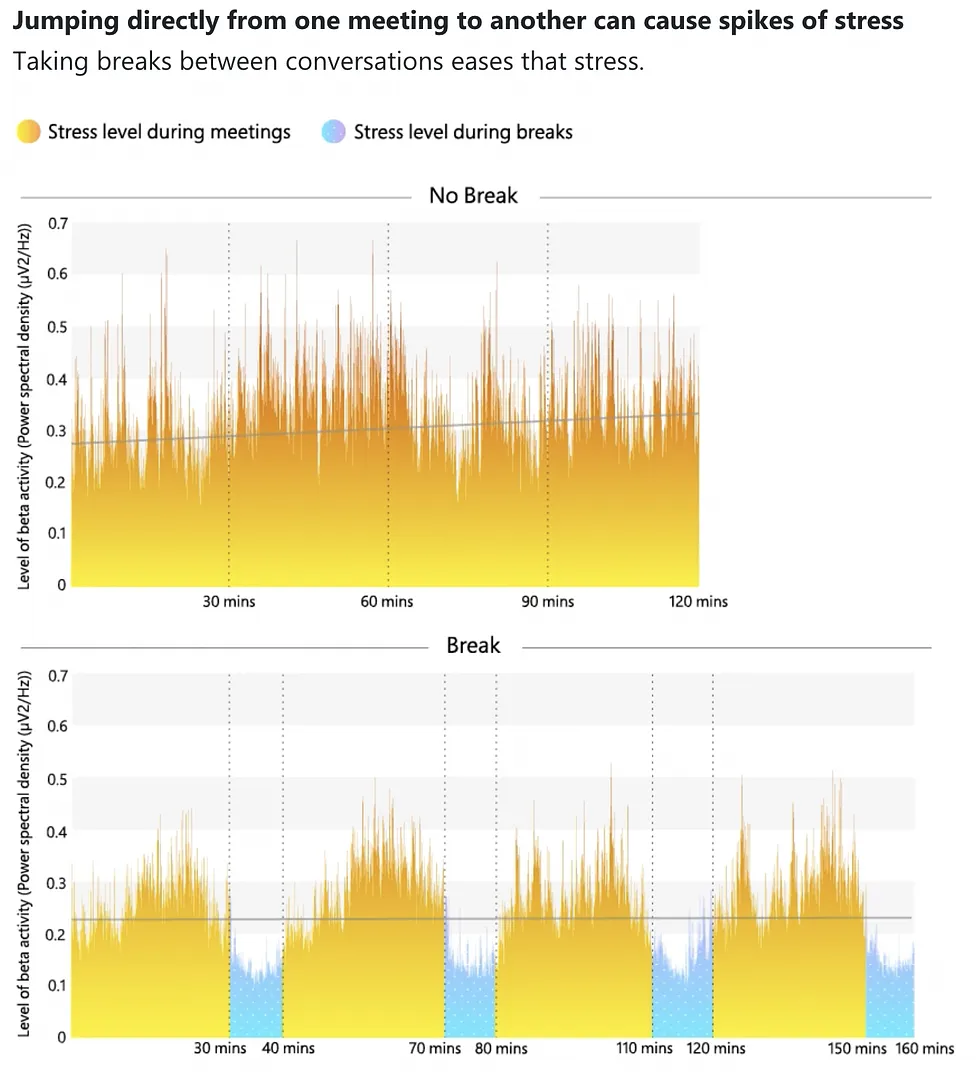
Source: Research Proves Your Brain Needs Breaks (Microsoft)
The flawed solution: schedule shorter meetings
The supposed antidote to back-to-back meetings is scheduling 25 or 50-minute calendar events to leave time for breaks. The problem with this approach occurs when you’re supposed to pause, but you’re not done: who calls the meeting’s end?
Except for those with big egos, executive assistants, or both, most of us let such meetings linger. With minutes left, you stammer something about a next meeting, find a way out eventually, and rush into your next appointment a bit late—despite that space for a break on the calendar.
If you can’t take time from a meeting’s end, why not take from its beginning?
Microsoft’s research on breaks suggests a brilliant solution to ensure you take breaks between meetings (emphasis in bold mine):
An individual or company might decide to start its meetings five minutes after the hour or half-hour, so that 30-minute check ins drop to 25 minutes and hour-long conversations shorten to 55 minutes.
That means a half-hour meeting that would have started at 11 a.m. will become a 25-minute meeting beginning at 11:05 a.m.
Don’t shave time from one meeting’s end; take it from the other’s beginning. 💡
The best part? It works!
I’ve used this meeting scheduling approach for over a year now. My mind still defaults to focusing on the whole (60) or half (30) hour when I know I have an upcoming meeting, which gives me at least a five-minute break.
If I do end up in a meeting that goes overtime, I can make a sincere apology for having to leave, calmly wrap up, and still have time left for a breather before my next call.
This practice is also a great conversation starter. I include an explanation in my calendar invites; usually, both parties immediately experience the benefit, so you start your meeting talking about the nice break you just had!