It IS The Idea, Stupid
#35 It IS The Idea, Stupid
This series is about what we’re learning, observing and experiencing while building our startup Saent (pronounce “Saint”). The good, the bad and especially the ugly, each time in under 5 minutes reading time.
When I first began thinking about Saent, I wondered whether it was safe to store my ideas on the servers of other “productivity” companies, like Evernote and Google. I posted a question about this on Quora. The answers all followed a similar theme. “If they want to “copy” it, they probably already are considering it,” wrote one user. Another said: “Nobody cares about your idea,” because, “ideas are cheap.”
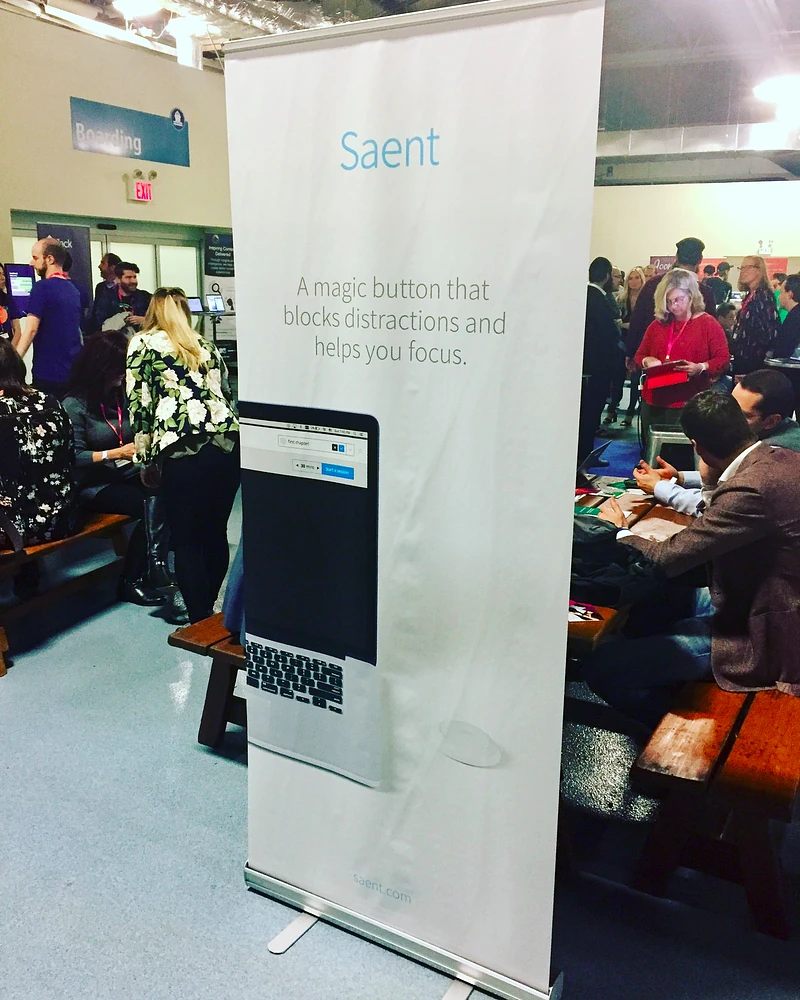
This idea turned into reality…
I understand why people answered this way. Not because they knew of the specifics of my idea (I obviously didn’t include those), but because this has become the prevailing wisdom in startup land. You hear it a lot: great ideas are a dime a dozen, but great execution is what makes great startups.
That’s illustrated well in this anecdote on Techdirt from 2010. In it, Mike Masnick relates the story of Fundable, a crowdfunding platform that predated Kickstarter by a few years but failed to get any real traction. Along comes Kickstarter with nearly the same idea, but (presumably) better execution and they become, well, Kickstarter.
“I cannot tell you how painful it is to watch 5 assholes take your idea and run with it and not even give you credit,” wrote the Fundable founder about Kickstarter. “I hate all 5 of them for that.”
For others, ideas, aren’t totally worthless, but they’re just a multiplier of execution. That idea was put forth by CD Baby founder Derek Sivers. (And made into the infographic below, by the folks at Crew.)
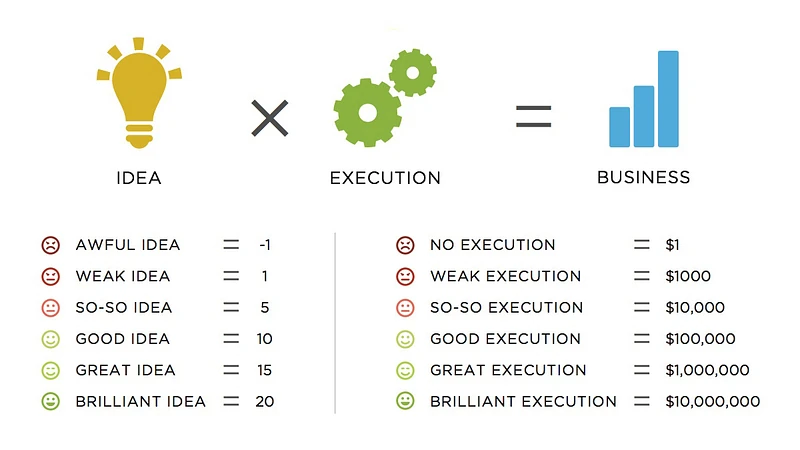
This diagram makes a lot of sense. A lot of people have nice, good, or even great ideas. But few of them dare to risk it all to make it a reality. That’s the execution part: if you have a not so great idea, you can still build an interesting business with great execution. Vice versa, an amazing idea can be squandered with poor execution. (See Fundable, for example.)
Yet there is also something wrong about this concept of “ideas being cheap.” Eye-popping valuations for companies like Uber and Slack are partially based on the current reality (their execution), but also on their visions for the future: Uber disrupting the entire logistics and transportation industry, Slack becoming the new Microsoft. The big startups, the ones that can provide a return for an entire VC fund in one splashy exit, tend to be the ones built around a whole new way of looking at the world. Those startups are built on big ideas.
“Ideas vs. execution. Is that really a debate? We’ve always believed new ways of thinking will change the world. What is this thought that ideas are trite? What about disruptive thinking, new ways of seeing? We hold these ideals dear.” — Amy Cosper, former Editor-in-Chief of Entrepreneur magazine
*Execution in 2017* It doesn’t end there. I believe another factor is coming into play that will further “disrupt” the idea x execution equation.
Twenty years ago, the challenges for launching a tech business were mainly, well, technical. Plenty of people likely had the idea to start an online bookstore (Amazon), create an online payments system (Paypal), or do online auctions (Ebay). But having the idea was the smallest part of the journey. Execution was a larger problem: how to build an online store? How to safely process payments online? How to find people who know how to do this stuff? How to structure a tech business? How to find capital for such a risky endeavor?
From this technical perspective, execution has a much larger stake in the eventual success of the business than the idea itself. But fast forward to 2017 and things look a bit different.
There are ready-to-go templates to launch websites, apps, and stores. You can hire programmers by the hour from anywhere on Earth. There are SDKs and APIs for every app imaginable, and you can raise money through Kickstarter, Indiegogo, AngelList, and accelerators. Soon, you will even be able to hand off some of the work to robots.
Execution is still damn hard, but it’s easier than before. Your ability to execute, to assemble teams of programmers or navigate technical problems is much less of a competitive advantage. So it makes sense to start paying more attention to the idea side of the equation again. In fact, while building things is becoming easier, I would say the idea part is becoming harder.
*The problem of new ideas* Most of us are glued to our devices, connected 24/7, and are constantly juggling too many balls. This gets in the way of what Cal Newport calls deep work: the hard, focused effort required to solve complicated problems. Most of us never get to this state anymore, or worse, don’t even know it exists (something our startup Saent is changing). This perpetual busyness also stands in the way of reading and learning, further limiting our ability to develop groundbreaking ideas.
In addition, most of us live in an echo-chamber created by the internet. While potentially the world wide web connects us with with anyone and anything, it also allows us to stay within our own interest group. Programmers hang out with programmers, entrepreneurs read what fellow entrepreneurs are writing, and investors debate the next big trends with other investors. We’re stuck in our filter bubbles. Since true creativity and innovation often happen by combining insights from a variety of disciplines and cultures, only “hanging out” with peers can be disastrous for coming up with great ideas.
Taking all this into account, I think the idea is in for a revival in the years ahead. Anyone can launch an app, manage a startup, and raise a bit of money. But do you have the ability, wisdom, and time to really get to the core of the issue? To keep asking “why?” until you’re at something truly significant? To keep reshaping your concept until it’s not just good, but brilliant? That’s the unique capability of the human brain, and I believe that’s what the future will ask more of from entrepreneurs and product people.
Need more focus in your life?
Visit saent.com to learn more about our app and magical button that help you turn distractions off and focus on!