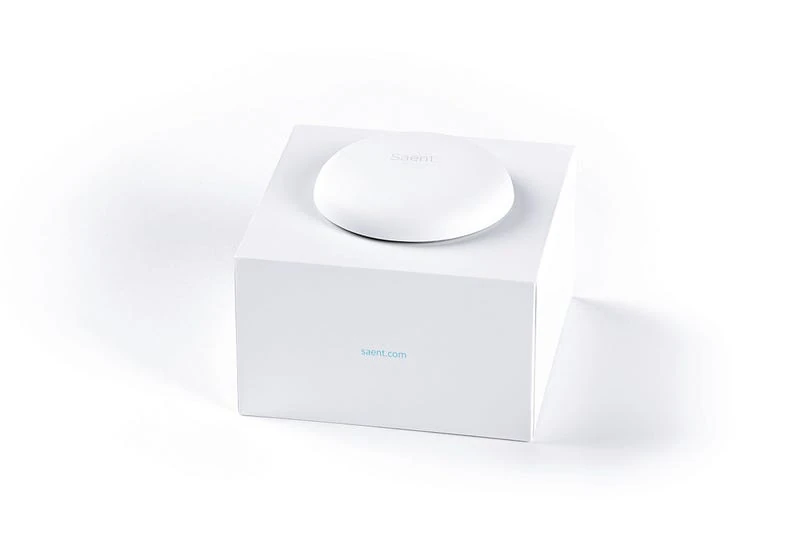
To Saent.com or Not to Saent.com?
#33 To Saent.com or Not To Saent.com?
This series is about what we’re learning, observing and experiencing while building our startup Saent (pronounce “Saint”). The good, the bad and especially the ugly, each time in under 5 minutes reading time.
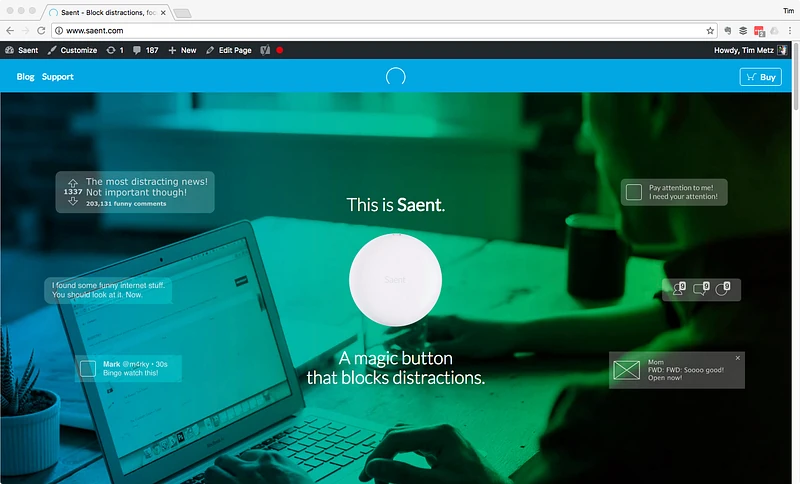
The Saent website happily running on Saent.com.
The other day, I was reading an article titled “Change Your Name” by Paul Graham, one of the co-founders of Y Combinator. In it, he explains why you still want to get the .com domain name for your company.
Graham’s article brought me back to one of my first tricky decisions in starting up Saent. Just after raising our first investment and having settled on a name, we needed to decide whether or not to purchase saent.com. Some told us domain names would soon be irrelevant; whether your name is .com, .io, or .crazy doesn’t matter anymore, people find you through Google and mobile apps anyway.
*Go .com* One person was adamant to go for the .com name though: my co-founder Russell. He insisted right away the commercial extension would be totally worth it. Because there was one caveat: saent.com was already registered and owned by a domain broker.
The good news about the domain being owned by a broker is that it is for sale. The bad news is that domain brokers are really good at extracting a hefty price for the URL. Since money is not the thing a startup has lots of, this was a problem.
We entered negotiations nevertheless. He started at $5,000; way out of our league. I only had two advantages on my side:
- Saent is a non-existing word, so he can not be guaranteed to have another buyer for the name anytime soon.
- At that point, there was very little about Saent on the world wide web, so he had no idea whether or not the domain was crucial to us or just a nice-to-have.
We decided we would take it for $2,000; not a cent more. Even that felt like a significant sum, but it pales compared to what we would have to pay once the broker figured out we were building consumer-oriented products with big ambitions for the future.
I took care to reply to his mails slowly, sometimes not at all. Since he kept following up and came down to $3,250 over the course of a few mails, it was clear to me he either had:
- Doubts whether he could sell this name in the future;
- A sales target to meet;
- Both of the above.
*Take it or leave it* Finally I came back with a take it or leave it offer: $2,000 wired to you tomorrow, otherwise I’ll be on vacation for several weeks.
…
He took the offer. Saent.com was ours.
Still, I felt maybe this was a clear case of wasting investors’ money: a freshly minted founder going overboard and spending funds on unnecessary stuff. But Russell was right: this has proven one of the best investments we’ve made that first year.
The .com is still a great marketing tool, the default go-to. And it also exudes confidence as Paul Graham mentioned in his essay. But it has proven invaluable in other unexpected areas as well:
- The .com is used in your email address and those of all your colleagues.
- Services like Google Docs and Drive use your domain name, so every time someone in our team uses those services (normally daily), you now get to use the .com.
- Landing pages for specific campaigns can now be directed to subdomains using the .com.
These are just a few examples and I’m sure we’ll find more uses as we’re going forward.
*So what to do?* I don’t agree with Graham your company name should be based exclusively on the availability of the .com name. And perhaps domain names will go out of fashion sometime in the next five to ten years (though I wouldn’t be surprised if for some reason they don’t). But for the time being, I certainly wouldn’t write off the value of the right .com and “grab ’em while you can!”
Need more focus in your life?
Visit saent.com to learn more about our magical button that helps you focus and live a more balanced life.