Why can't I focus? - 10 invaluable insights for more concentration
Congratulations. Asking “Why can’t I focus?” means you’re on your way to overcoming your concentration challenges. Many other people don’t even realize they’re struggling with focus. They live in a distracted haze where any activity requiring deep work seems difficult at best and more often impossible.
We recently hosted a ten-day focus challenge and course for 60 people from over 20 countries. This group was as diverse culturally as it was professionally, including coaches, students, executives, and stay-at-home parents. Like you, they came into the challenge with a question: why can’t I focus?
Below I’ve curated the ten most remarkable discoveries from our challenge that answer why you might be unable to find focus.
1. A simple exercise brings home the folly of multitasking
Many participants questioned multitasking and how it affects their focus after a short exercise on the second day. Here’s what participant Narcisa said after completing the assignment:
“This was very interesting. I’m a master of multitasking, and until this exercise, I was under the impression I’m doing pretty good as all the job tasks are complete within regular work hours.”
This multitasking test takes just a few minutes. Give it a try by watching the first minutes of the video below and see what you take away from it.
2. Browser and desktop notifications are huge distractors
Browser and desktop notifications appear to be some of the most notorious distractions. As participant Wilco shared on day three, they break flow and suck you into a distraction doom loop of checking social media, emails, and Slack.
Some employers require such notifications to stay on, but mostly they’re self-inflicted damage. Worst of all, nobody seems to know why these notifications are helpful, especially browser ones.
The simple solution? Turn them off, now. It takes a minute to do and saves you hours of lost focus.
3. Do deep work before connecting to the world
Deep work first is one of the most helpful practices many participants took away from our challenge.
But carving out focused time first thing in the day isn’t enough. Deep work first means not connecting to the outside world until you’ve completed one or two hours of it.
Keeping Slack, email, social media, phones, and other information flows closed for a few hours means you’re left with your pristine morning mind. This approach is challenging for sure but highly effective when you pull it off.
One of our community members, Angela, is currently running a deep work first experiment. Follow along—or join her!—here.
4. Put your phone out of reach or in another room
Phone distractions were less of a problem for our challenge participants than I expected.
Even before Find Your Focus, many realized their phones can be a tempting source of distraction. But making it less so isn’t complicated: they put their devices out of reach or, even better, in another room.
Russell—my Saent cofounder—and I have long played with this idea. Below is an image—and here a Kickstarter pitch video—of a product we have ready but never released: an app plus box to put your phone in when you want to focus.

Saent’s mobile app and box to tame phone distractions.
5. Prioritize your day and task list with rocks and gravel
Participant Giancarlo mentioned his rocks and gravel prioritization approach on the first day. Others picked up on the idea, and it got frequent mentions throughout the challenge.
Every morning, Giancarlo takes 15 minutes to write down a list of “rocks and gravel,” his big and important tasks for the day versus the smaller stuff. This practice helps him focus on what needs to get done.
He included an example of what that looks like—see the image below. You’ll notice important activities on the left within timed blocks and smaller tasks like calls on the right.
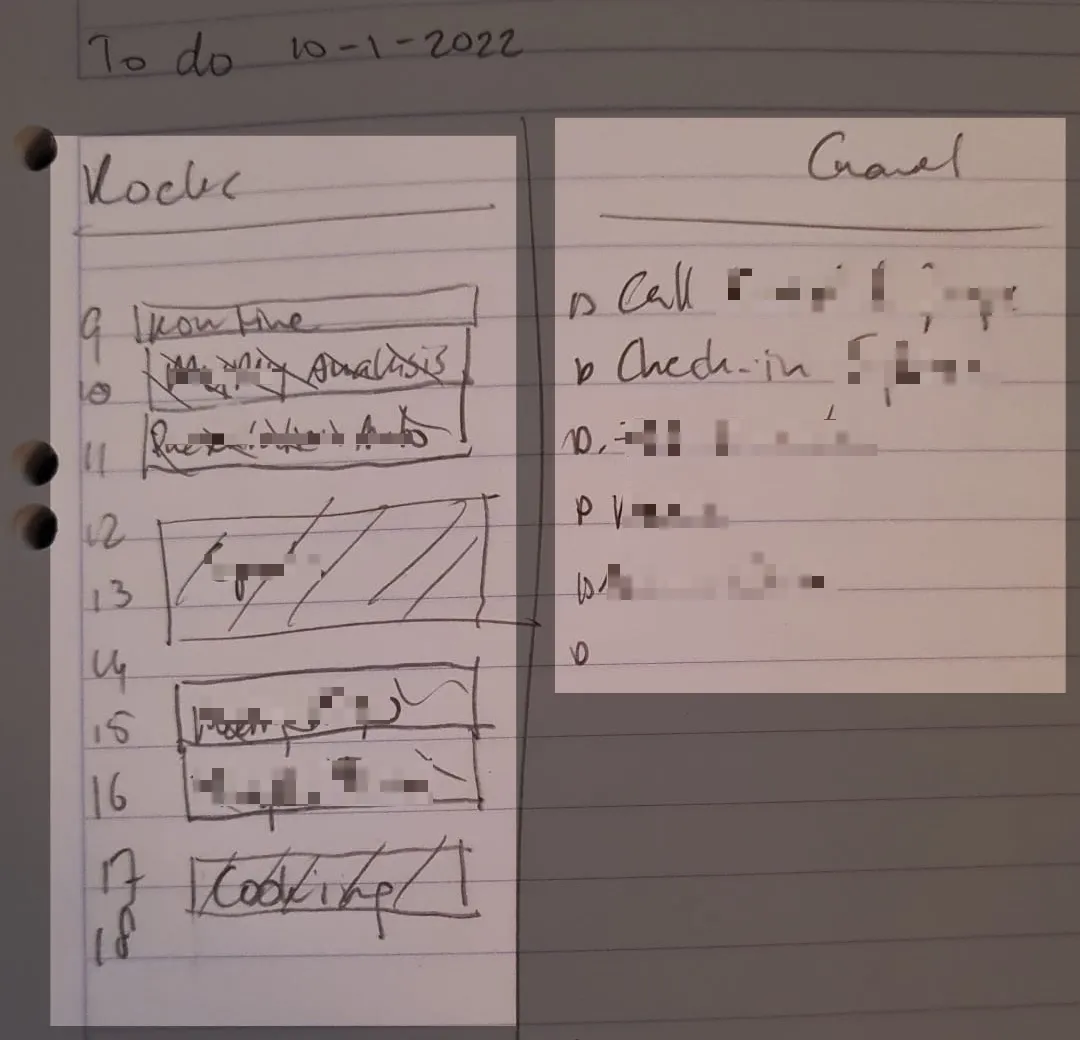
Read up on rocks, pebbles, and sand here if you’re looking for a practical approach to plan your day.
6. Be present in everyday activities
Several participants—myself included—admitted not being present in everyday activities, like when eating with family or riding a bike. It’s easy for your mind to fall into a habit of always thinking about things to do, exciting ideas, or just random stuff.
Participants like Lina, Willem-Jan, and Lourens vowed to start practicing—what I now call—mundane mindfulness: bringing your attention back to the present moment during everyday activities. Doing so trains your concentration capabilities, which benefits your professional focus, too.
7. Use Saent’s non-committal answer list to make saying no easier
On day nine, I shared a list—pictured below—of non-committal answers you can give to avoid defaulting to “yes” when you get a request. This practice reduces the number of commitments you take on, so you have more focus for the ones you keep. Many participants found this list helpful—though nobody seems to have blamed their cat yet. 🐱
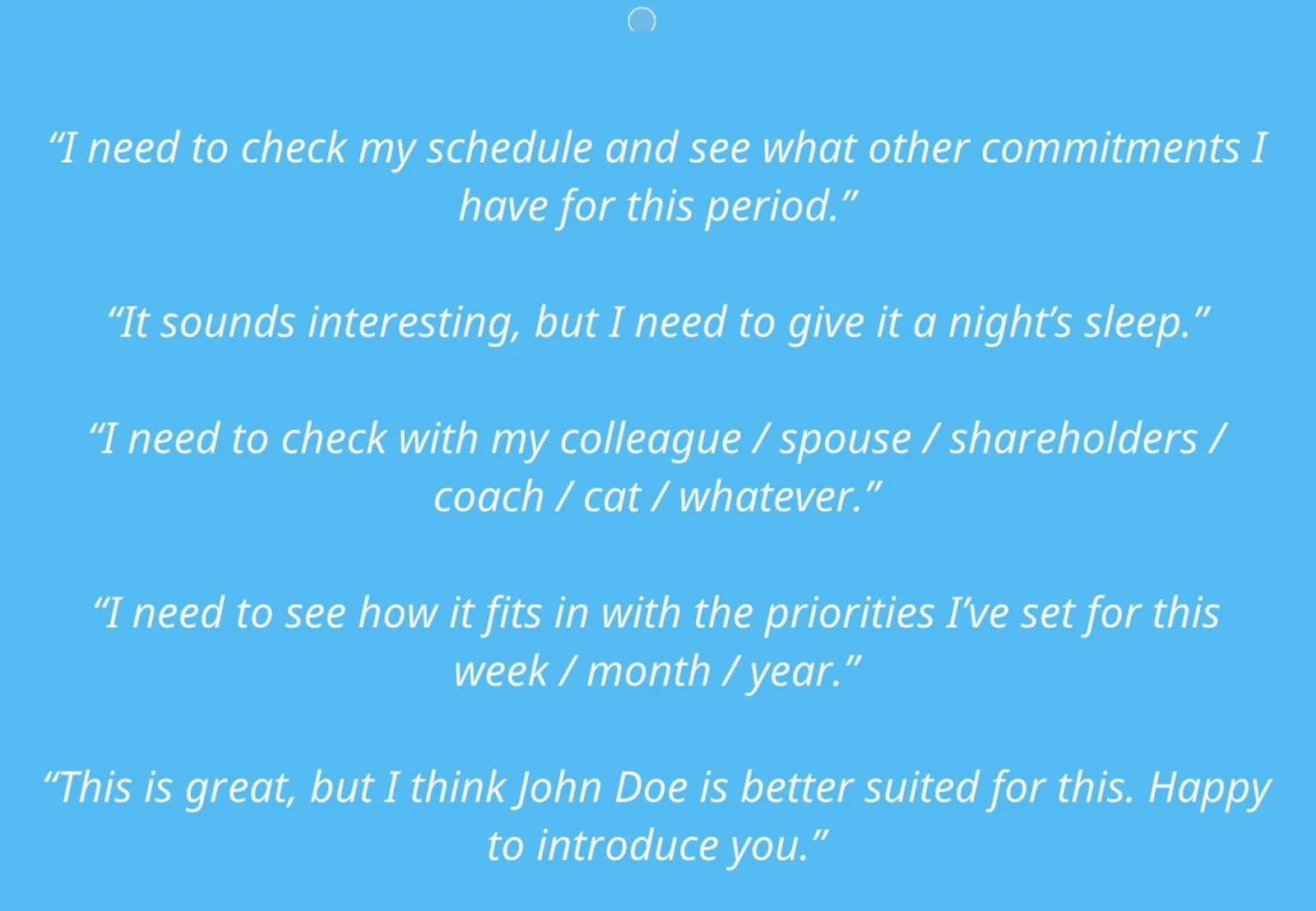
A list of non-committal answers you can use to say no more often.
Participant Thomas also shared an excellent checklist he has on his wall that outlines how he wants to respond to requests:
- Be human.
- Be respectful.
- Be open.
- Be clear.
- Be thankful.
- Be helpful.
- Be courageous.
8. Swap Inbox Zero for Yesterbox to tame your email
Email is a huge distraction. Many people I talk to can’t keep up with—or have given up on—Inbox Zero, striving for an always-empty mailbox. Yet the alternative of letting emails run their course and missing critical ones isn’t sustainable either.
A middle-ground that resonated with participants like Lina, Matthieu B., and Lourens is Yesterbox, essentially applying Inbox Zero to yesterday’s emails. This approach slows down the email feedback loop and its volume, gives reflection time, and still keeps you on top of your emails.
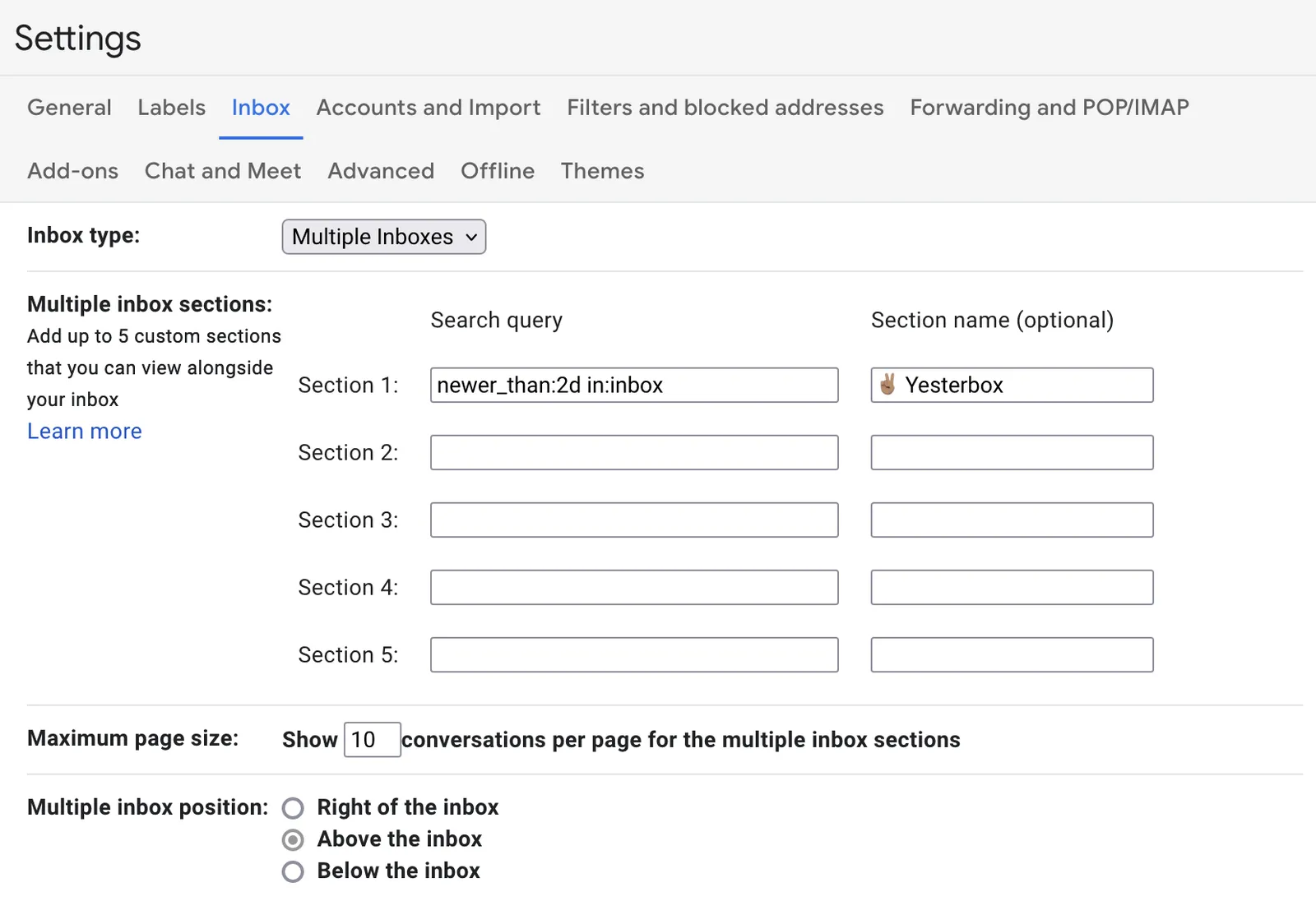
Lina shared this helpful screenshot to show how to set up a Yesterbox filter in Gmail.
9. Work from a cabin in the woods, like these two participants (!)
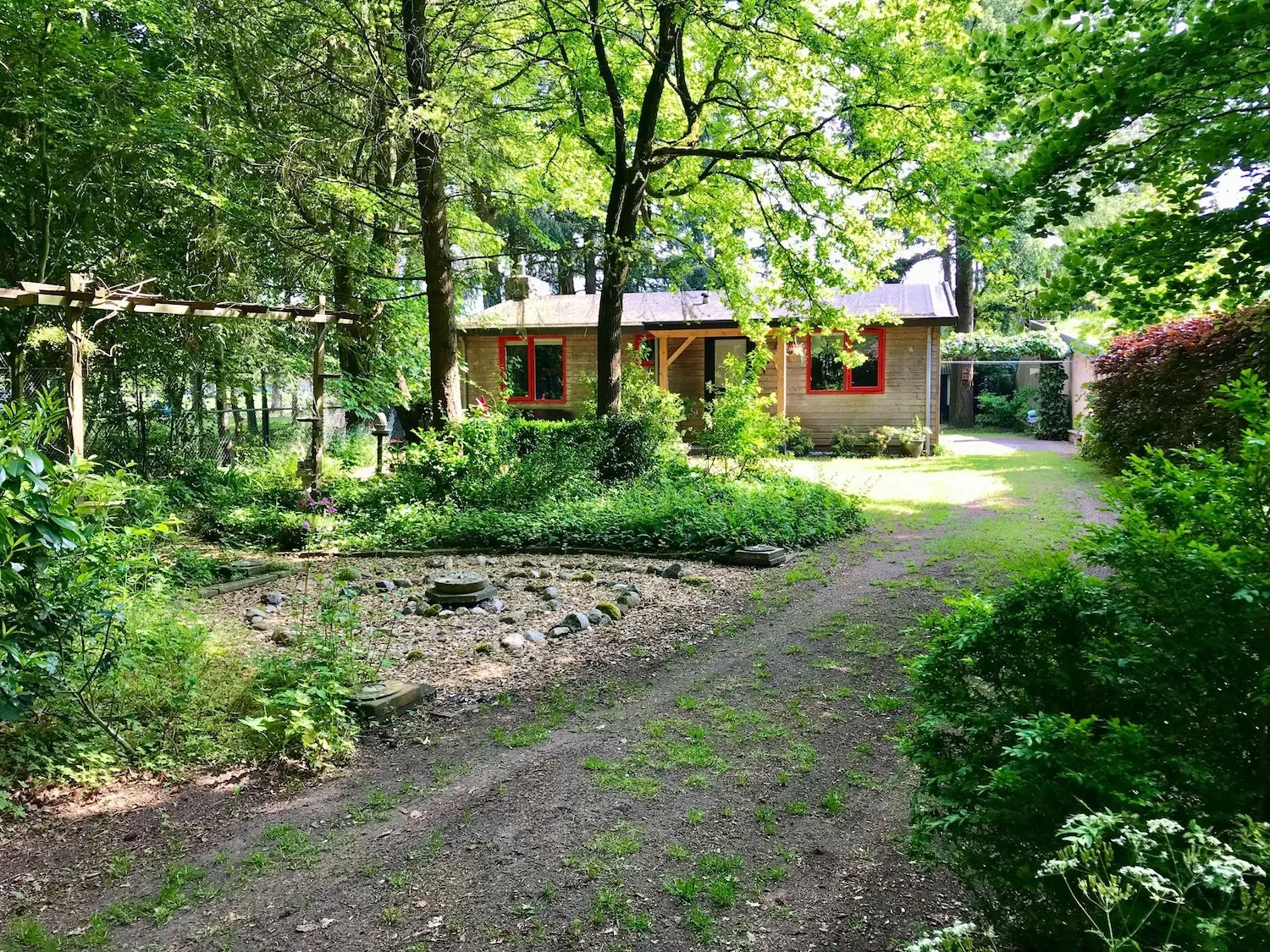
On day three of Find Your Focus, I talk about going to a cabin in the woods as a way to destroy distractions. While I assume that works well, I’ve never done so myself and was amazed to find out two of our participants work from cabins in the woods!
Participant Bard now works from a bungalow in The Netherlands and used to do so from one in Australia (both pictured below). Willem-Jan also works from cabins in woods in both The Netherlands and Italy.
This discovery triggered a topic in the Saent community about everyone’s work environment. You can join our community, meet people who work from cabins and woods, and share your workspace here, too (even if it’s not in a forest!).

10. Rid yourself of break guilt
We discussed the positive influence taking breaks throughout your day has on focus on day seven. But even when you’re aware of this benefit of breaks, you might still not take them out of guilt.
Participants Lydia and Giancarlo mentioned feeling guilty about putting down work during the day. It feels unproductive—or inappropriate—to exercise, meditate, or read in the middle of the day. Yet such moments and activities replenish your energy and hence, focus. They might even lead to breakthrough insights that benefit your work much more than another drowsy hour at the screen.
There’s no straightforward “hack” to overcome this guilty feeling. But try to remind yourself breaks can be the most productive, beneficial, and enjoyable actions you can take throughout the day!
Even more ideas to answer: Why can’t I focus?
Our Find Your Focus participants shared a wealth of reading and viewing materials with each other throughout the course. Here’s a list with links, all on topics that have helped them answer that burning question: why can’t I focus?
- The truth about distraction (distractions - Oliver Burkeman’s blog)
- Big Rocks, Pebbles, Sand - How to manage it all? (prioritization, tasks - article)
- Recovery Rocket (breaks and recovery - PDF)
- Why You Procrastinate (It Has Nothing To Do With Self-Control) (procrastination - New York Times)
- How boredom can lead to your most brilliant ideas (creativity - TED video)
- What the Noting Technique is, and how to take advantage of it (meditation - Headspace blog)
- Mental Fitness Video 20 - Practicing PQ Reps To Build Self Command (brain-building - YouTube video)
A 10-day path to ultimate concentration
Focus is essential for getting things done and doing them well. But even a little concentration can seem unachievable in the age of smartphones, social media, and endless to-do lists.
Find Your Focus is a short, free book that fits into even the busiest schedule. Complete one chapter daily to master ultimate concentration within the next 10 days.